
In a Grand Tradition: Benefits of the Past
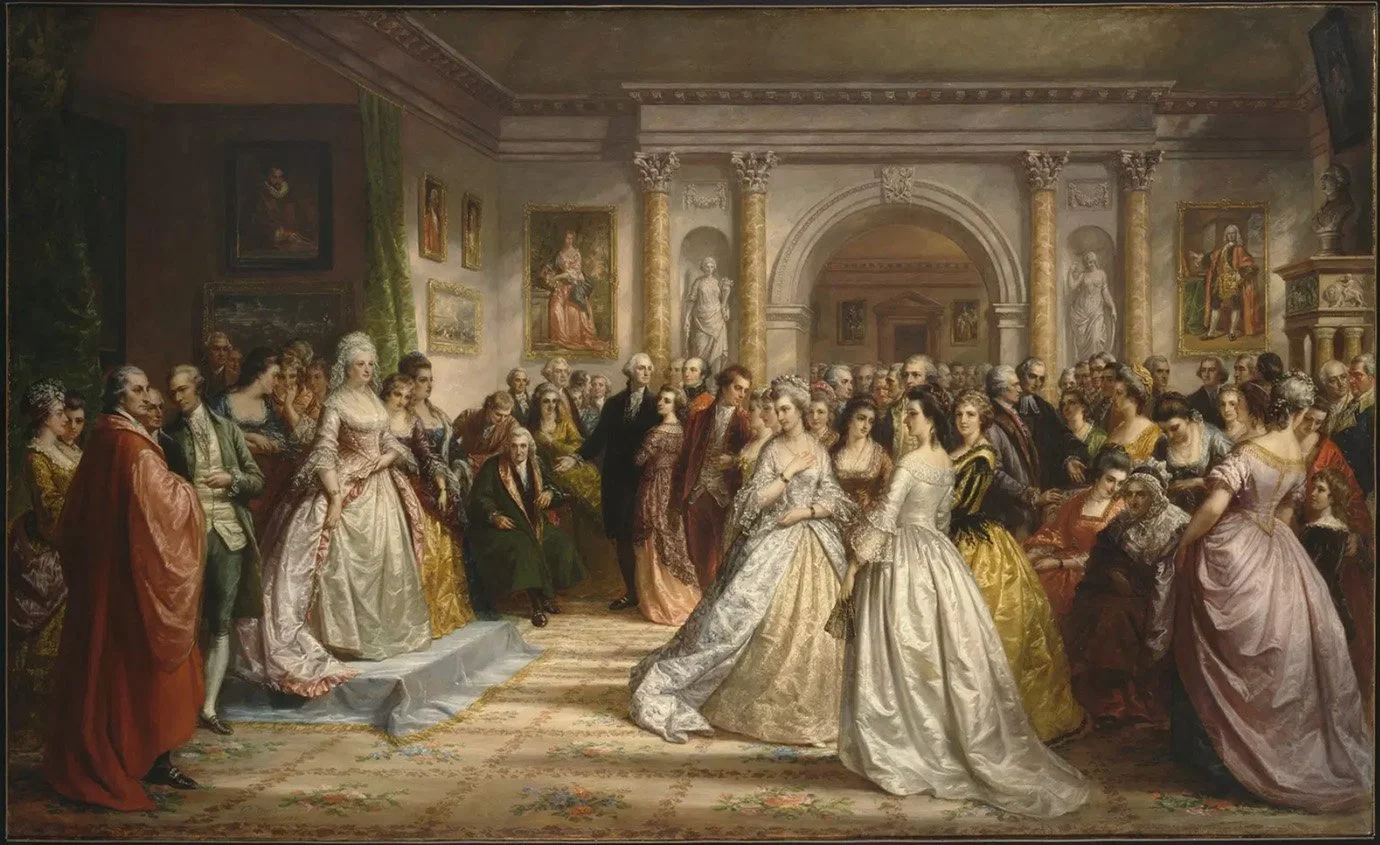
Daniel Huntington’s 1861 oil painting The Republican Court (Lady Washington's Reception Day), now in the collection of the Brooklyn Museum, was the basis for engravings that were widely distributed in the late 19th century. Photo: Brooklyn Museum
The Floating Hospital’s Summer Gala on June 2 is a celebration of our 160th anniversary as well as a commemoration of the role of supporters in our history.
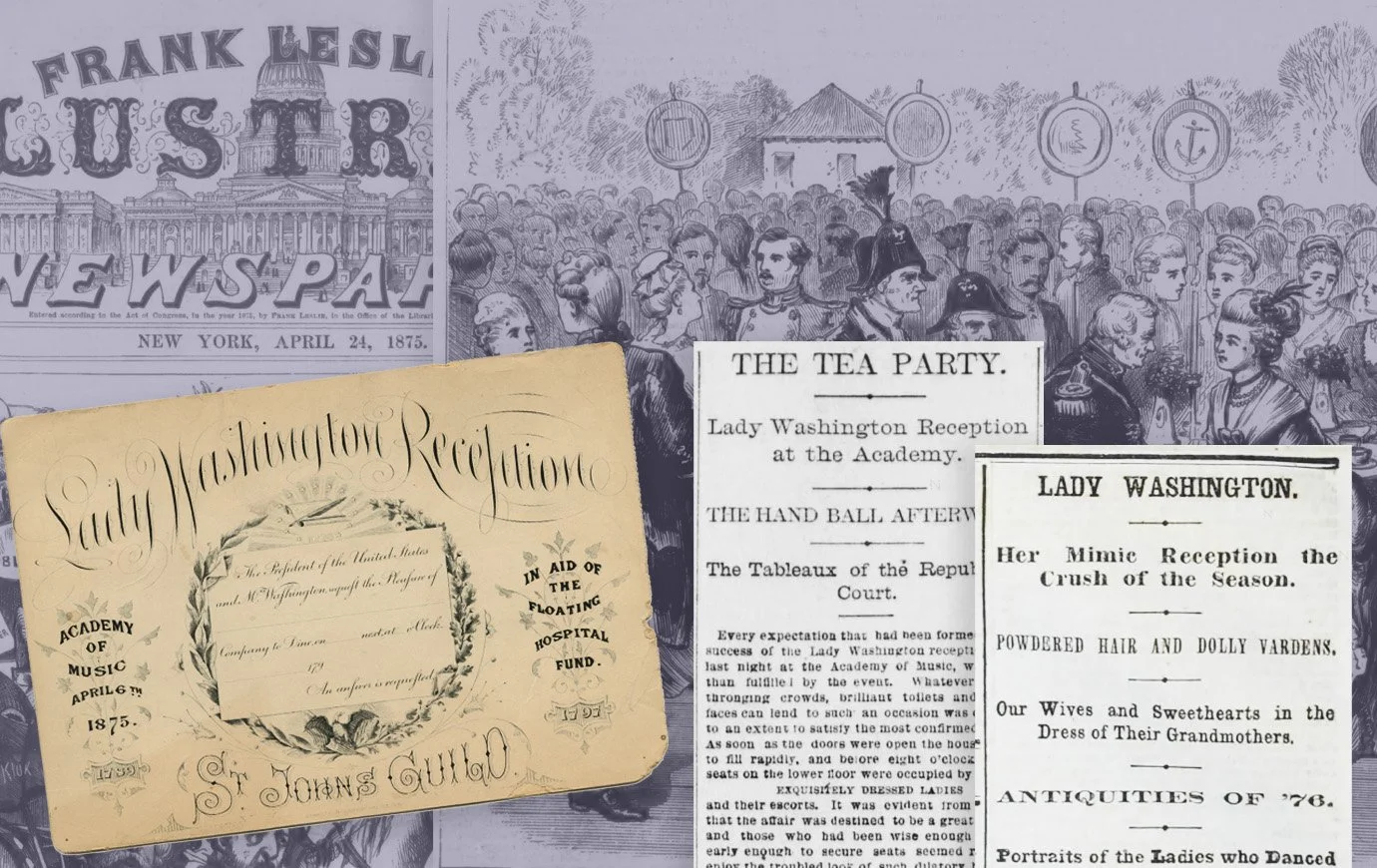
Founded in 1866 as St. John’s Guild, the charity that would become defined by its Floating Hospital excursions around New York Harbor first needed a boat to sail. At the dawn of the Gilded Age, the Guild had the backing of some of the city’s most sought-after benefactors when it held its first ball on April 6, 1875 as a “Lady Washington Reception” that took place at the Academy of Music at 14th Street and Irving Place.
The Lady/Martha Washington receptions
Martha Washington’s grand niece attended as well as a direct descendant of John Adams. A century after the American Revolution’s first battle and 10 years after the Civil War ended, the country’s founding was a popular party motif. A tableau recreating the Daniel Huntington painting that inspired the ball’s theme was a centerpiece of the event.
A New York Times article describing the festivities noted that in the summer of 1874, the Guild had rented a barge to provide 18 free trips on the water for “the destitute people in this City.” The trips served 15,202 children—a sum that would have been much higher if the Guild had its own boat, the author observed.
The five ships in our history became known for caring for sick children living in the most impoverished conditions in the city. On the boats we operated from 1875 to 2001, the staff ensured the children were treated, bathed, fed, and entertained, in addition to educating their families about good hygiene.
Such a mission was expensive. Fortunately, the balls were so popular that they continued until 1882, after which they became too expensive to mount. By the last ball, the New York Times noted that The Floating Hospital had made 252 trips and treated 197,017 sick children. Among the illustrious guests was Ulysses S. Grant, the commanding general of the Union Army in the Civil War and a former president of the United States.
The ‘Portraits’ exhibitions
By 1894, Caroline Schermerhorn Astor (Mrs. William Astor or “the Mrs. Astor”) and the 400 New York society members she deemed worthy of filling her ballroom had devised a new theme for a dual fundraiser for the Guild and the Orthopaedic Dispensary and Hospital. It was an exhibition at the National Academy of Design of female portraits by American and European artists, such as Winslow Homer, Mary Cassatt, Thomas Gainsborough, John Singer Sargent, and William Merritt Chase. Mrs. Astor lent her own full-length portrait by Carolus-Duran, which she stood in front of when receiving guests at her home. It is now in the collection of the Metropolitan Museum of Art.
The popularity of the exhibitions contributed to what was already a frenzied demand and competition for portraits among the fashionable set, and led to further benefit shows at the Academy in 1895 and 1898.
Newspapers reported that thousands of people attended the first show, buying catalogues as well. Tea was served, and many of the paintings’ subjects were present to welcome guests. Admission was $5 on the opening day of November 1, and then 50 cents until it closed on November 24, netting the Guild a total of $9,000.
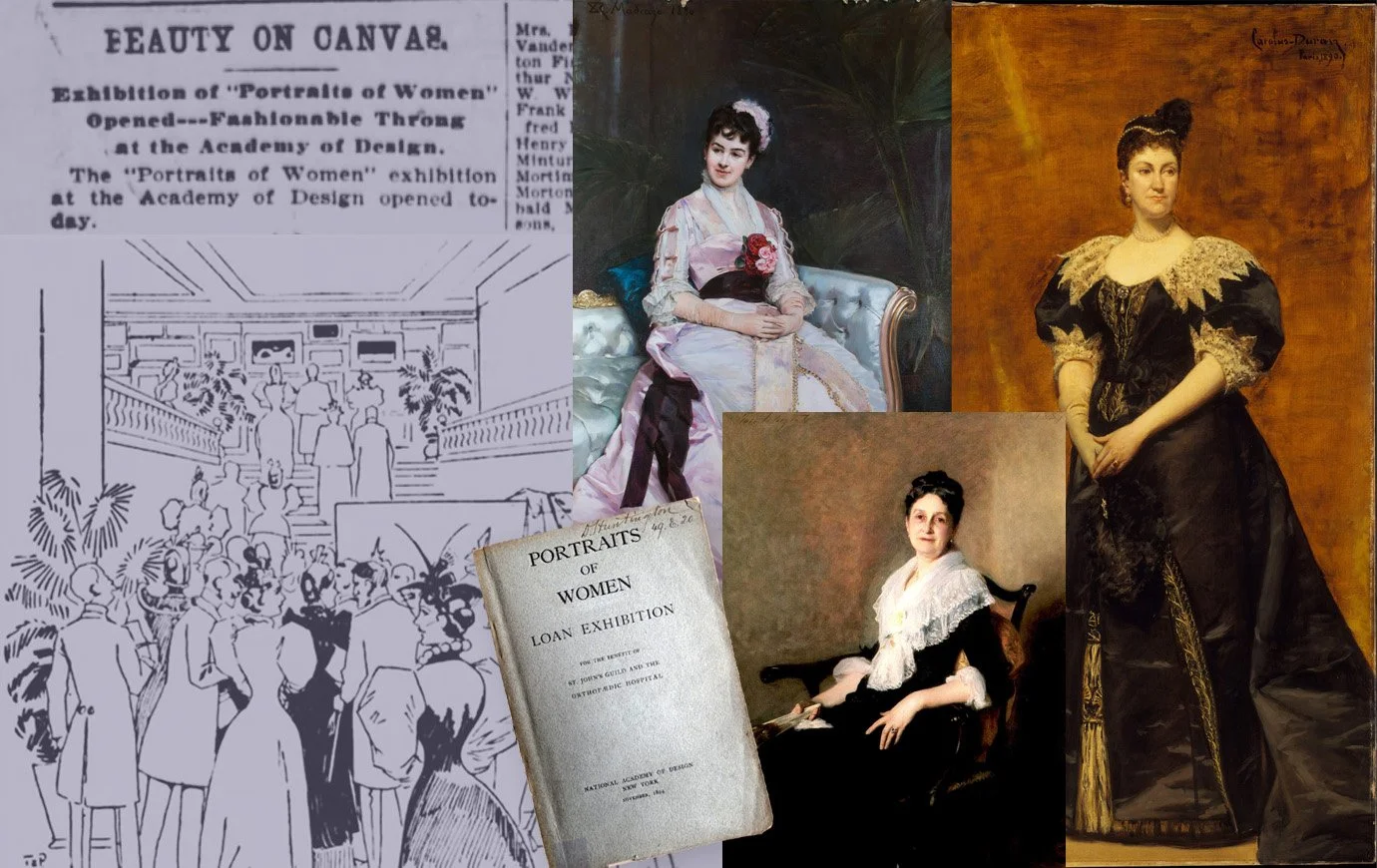
Article and illustration from the Evening World, November 1, 1894, alongside the exhibition catalog and (clockwise) portraits of Mrs. Cornelius Vanderbilt II, by Raimundo de Madrazo y Garreta (The Breakers, Newport), Mrs. William Astor, by Carolus-Duran (Metropolitan Museum of Art) and Mrs. Henry G. Marquand, by John Singer Sargent (Princeton University Art Museum), all featured among the eight hundred portraits on display.
A new era of patronage
These benefit events were part of both the conspicuous consumption and charitable largess of the Gilded Age, and one way for the newly wealthy to gain entry into old money society. When the excesses of the time lost favor as Progressive Era reforms took hold in the 1890s, The Floating Hospital was fortunate to attract patrons such as Helen Juilliard, Solomon Guggenheim, and Lila Acheson Wallace in the decades that followed.
In 1979, Elizabeth Taylor and her husband Senator John Warner attended our benefit reception at the Roseland Ballroom, where Taylor was presented with an award for her charitable efforts on behalf of The Floating Hospital. At this year’s soiree on June 2, we will celebrate this illustrious past while we envision brighter futures for the patients we serve. Please join us.