
Little mothers and little fathers too!
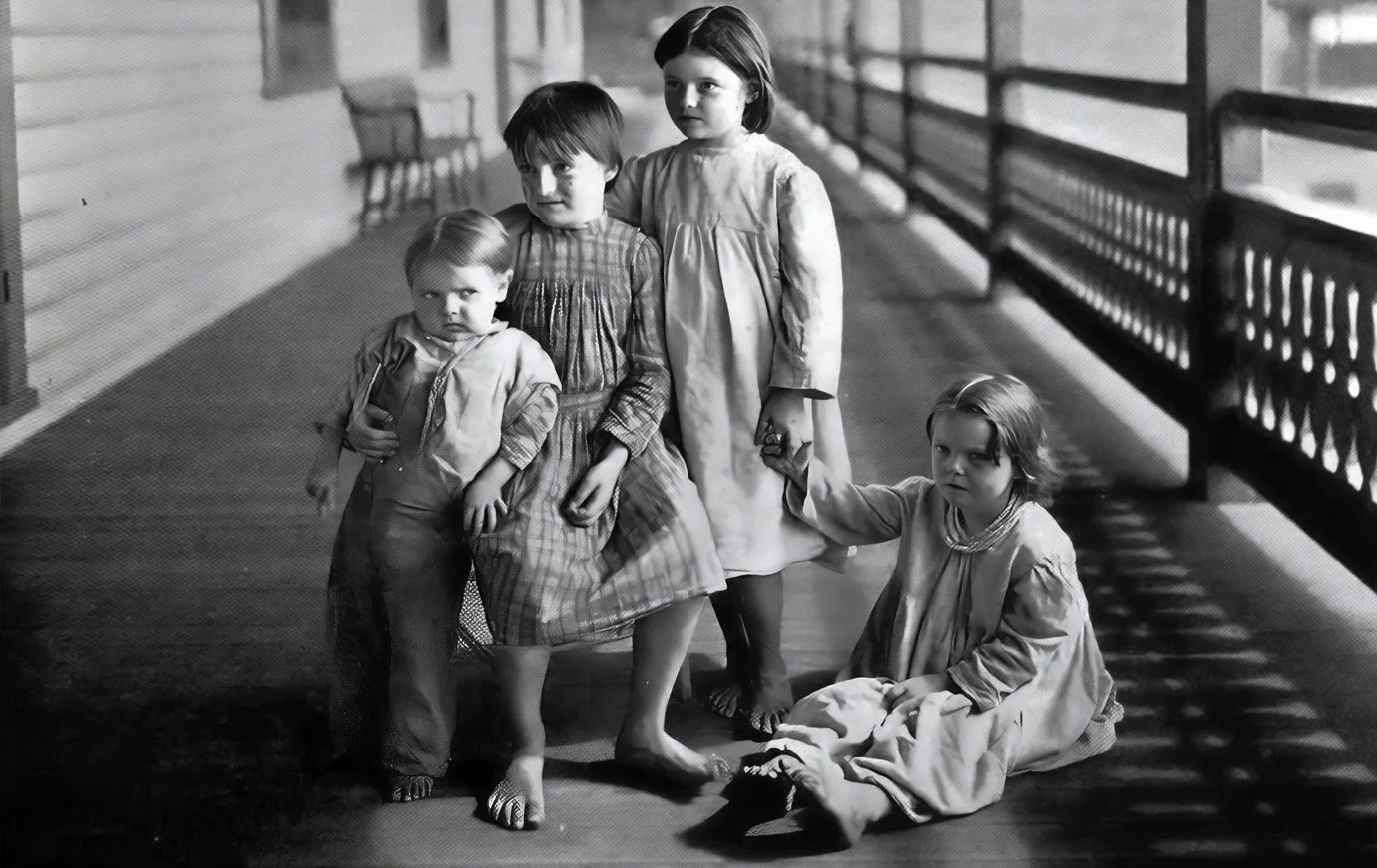
A "little mother" and siblings on the verandah at Seaside Hospital.
Writing in The American Journal of Nursing, the chief nurse onboard the Emma Abbott highlighted the special consideration given the older children known as “little mothers.” Normally, children over the age of six were not permitted onboard.
“These little girls, children only from six to twelve years of age, whose faces already show signs of care and responsibility, appeal to the thoughtful. These are the cases receiving special instruction and attention — the little mother of ten years, with infant in arms, many times two or three other children following, whose mother is ill in some hospital or toiling hard to support the family, but who knows well that her little ones are carefully protected on ‘The Floating Hospital.’”
Although published in 1904, Sarah Bessie Palmer, Chief of the Trained Nurse Department, described here the routine as it was in 1902, the last year that we had two boats on the water.
“All employees are on duty at six a.m. daily and receive their three meals on board” adding “There are three landings daily on each side of the city and in Brooklyn. The first is made at eight a.m., and as the hospital approaches the pier one sees in line hundreds of anxious mothers carrying the sick children, who have patiently awaited the approach of the hospital for some time, for many leave their homes very early to get out in the free, open air.
Each mother presents a ticket containing the name, address, age, and diagnosis signed by a physician, and often the treatment given. In such cases the same is carefully carried out by the hospital physician, thus avoiding any harm by change of treatment.”
Educating the mothers was part of the process… “Instructions of one hour are given tri-weekly by the chief of the nursing department to young mothers, half of the time assigned to the lecture being devoted to the care of infants, preparation of foods, etc., and the remaining half hour is given them for asking questions, and I can bear testimony that they show thought and an intense desire for better living.”
Improving personal hygiene also had to be taught… “The lessons of the bathroom, the careful instructions given to mothers and children, cannot but bear fruit for generations to come. No baths of salt water are given until the hospital is well down the bay, thus avoiding the stagnant waters around the city. It will doubtless be seen that this department has become an educator among the tenement poor.” (1)
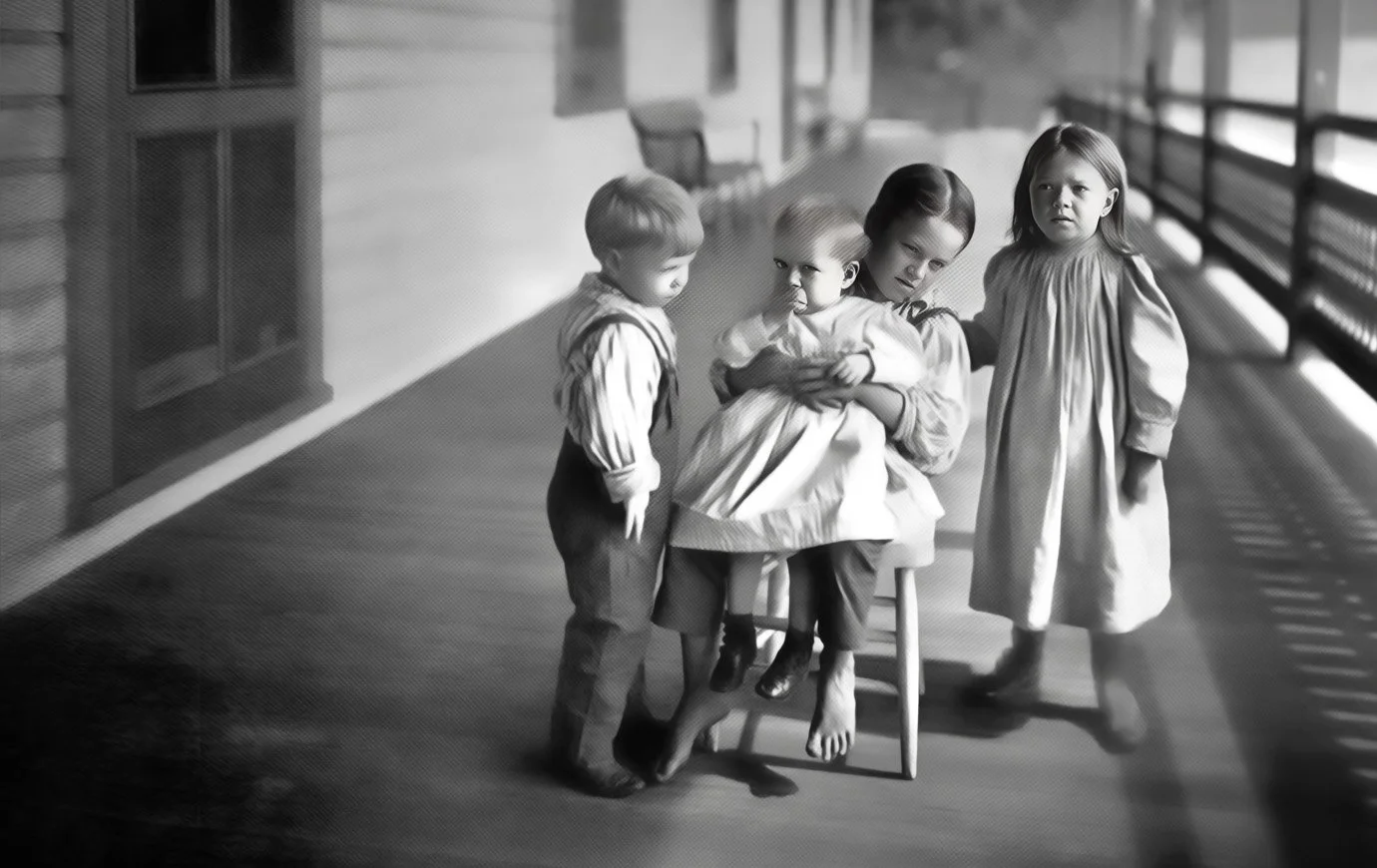
Older brothers also bore the responsibility if a parent couldn’t accompany the younger children.
In 1902, with both the Emma Abbott and Helen C. Juilliard on the water, they would make 114 excursions, carrying 81,554 mothers and children, and providing 16,726 salt-water baths. This was the year the Guild would pass the million mark in total passengers carried. Seaside Hospital was also busy, caring for 1,784 patients over 22,132 patient days. (2)
Unfortunately it was also the last year for the Emma Abbott. With a failing economy the following year, the Guild could afford to keep only one boat on the water. While the Emma remained ready for an additional two years, she never again sailed for the Guild, ending her days as a tuberculosis camp for the city.
Source:
“The floating hospital of St. John’s Guild, New York City,” by Sarah Bessie Palmer, The American Journal of nursing, 1904
Report of St. John’s Guild, 1902 (both images are taken from the 1903 report)